Thursday, April 23, 2009

From Upper Canada to Ontario


*** Please respond to one of the following questions. Feel free to write your response using a word processing tool such as Neo Office prior to posting it on the website. Remember that pressing the Command key + C button will copy your work and the Command key + V button will paste the work. Good luck!

1) Toronto City Council has made repeated attempts to have all Ontarians celebrate Simcoe Day on the first Monday in August. In other parts of the province, it is simply called Civic Holiday. Write a letter to the premier of Ontario explaining why all citizens in Ontario should celebrate this day as Simcoe Day.


2) What qualities did a Loyalist pioneer need to succeed in Upper Canada? What qualities do new immigrants need to succeed in Canada today? In what ways are your lists similar? In what ways are they different?

Thursday, April 16, 2009

Online Response #3: Simcoe and the Slaves

Author: Patrick Bode
Source: Beaver Magazine
Date: June, 1993

Upper Canada, 1793

This year marks the 200th anniversary of a largely forgotten but significant event in Canadian history. It was in the year 1793 that the Assembly of Upper Canada (barely a year old itself) passed an Act "to prevent the further introduction of Slaves, and to limit the term of contracts for servitude." This Act, passed in an obscure colony in the heart of North America, was a first tentative step in ending the tyranny of slavery in Canada.

Significantly, the moving spirit behind the Act would be a black Canadian.

In March 1793, Peter Martin, servant of Colonel John Butler, appeared before the first meeting of the province's Executive Council at Navy Hall in Newark (now Niagara-on-the-Lake). Little is known of Peter Martin except that he was selected to represent the black citizens before the colonial government.

The Executive Council of the day was composed of the Lieutenant Governor John Graves Simcoe, Chief Justice William Osgoode and a prominent citizen and slaveowner, Peter Russell. This new executive was determined to create an orderly government among the Loyalists who had taken up land along the fringes of the American republic. Among these Loyalists were a number of black veterans, men who had escaped from slavery and volunteered to fight in Loyalist regiments against the revolutionaries. One veteran, Richard Pierpoint, had been born in West Africa and had been a slave in New York for 20 years. In 1780 he escaped, made his way to the Niagara Peninsula and joined Butler's Rangers. As a reward for his services he was granted land near Fort Niagara and settled in the area.

However, most blacks living in what was to become Ontario were condemned to slavery. Slavery of both blacks and natives had existed since the beginning of European settlement. French settlers at what eventually became Windsor, had used slave labour since 1749. Many Loyalists brought their slaves with them to Canada. An Imperial Act of 1790 encouraged immigration to Canada and assured prospective immigrants that their slaves would remain their property. The province's black population was therefore a peculiar mixture of black veterans who had been granted land for their services and slaves who were completely without rights or freedom.

Peter Martin was before the Executive Council to speak on behalf of the latter He began by telling them of the violent outrage committed against a black woman, Chloe Cooley, near Queenston. Her master, one William Vrommond, had decided to sell her in New York State Because she resisted, he had her securely bound and dragged across the border to her new owner. Simcoe was shocked, and the Council resolved to direct the Attorney General to prevent such breaches of the peace in the future. Nevertheless, both Simcoe and his Attorney General, John White, knew that under the existing law, Vrommond was within his rights and that nothing could be done. But this would not dissuade Simcoe.

The Lieutenant Governor, John Graves Simcoe, was a distinguished military officer, but largely unfamiliar with civil administration. Yet he was determined to erect in the province a copy of the British form of government and root out the "democratic subversion" that had been at the heart of the American Revolution. Unlike many of his contemporaries, Simcoe had come to abhor slavery and he was one of the first imperial administrators to work for its abolition. While a member of the British House of Commons, Simcoe had spoken against slavery as an offence against Christianity. Given his own way, he would have freed all slaves immediately. The political realities of Upper Canada, however, intervened.

Simcoe's agent in the provincial Assembly, Attorney General John White, introduced a bill in June 1793 to provide for the gradual abolition of slavery. It was not well received. The elected members, many of whom were merchants or farmers who depended on slave labour, saw no need for emancipation. White later wrote that there was "much opposition but little argument" to his measure. On the Canadian frontier, hard labour was the only way to clear land or make it productive, and many settlers considered slaves to be their most valuable assets. After considerable concessions to the slave owners, the bill to provide for gradual abolition of slavery was passed and given royal assent on 9 July 1793. In his address to the Assembly, Simcoe praised this act as a "singular pleasure that such persons as may be in that unhappy condition which sound policy unites to condemn, added to their own protection from all undue severity... may henceforth look forward with certainty to the emancipation of their offspring."

Undoubtedly, Simcoe looked upon the act as the first step in the total elimination of slavery.

Yet the unfortunate reality was that it freed no one. All persons who were slaves would remain so until they died. However, no further slaves could be brought into the province, and all children of female slaves would become free at the age of 25. As a concession to slaveholders, the Act actually discouraged the freeing or manumission of slaves by requiring the master to provide security that the former slave would not become a public charge.

One member of the Assembly, D.W. Smith, was sympathetic to black Canadians and he did not think that the act went far enough. Smith wrote to a friend "We have made no law to free the Slaves.... A free man who is married to a Slave, his heir is declared by this act to be a slave. Fye, fye. The Laws of God & man cannot authorize it."

But there was no doubt that Simcoe's act was intended to throttle slavery. "By a piece of chicanery", wrote the wife of the Provincial Secretary, Simcoe had "freed all the Negroes." So unpopular was the act with slave owners that in 1798 a group of them headed by the Virginia-born Christopher Robinson introduced a bill into the Upper Canada Assembly to permit the importation of additional slaves. As well, this act confirmed the Imperial Act of 1790 permitting immigrants to bring their slaves into the province. It is an indication of the strength of the slavery lobby that this bill passed in the Assembly, but was stalled by the government appointees in the Upper Chamber. This bill died at the end of the session, but the attempt to fully re-instate slavery in Upper Canada had almost succeeded.

Slavery persisted in Upper Canada after 1793. In the first decade of the nineteenth century there are many accounts of slave sales. Occasionally, people simply ignored the law and imported additional slaves from the United States. But the institution was doomed. In 1807, Sandwich merchant John Askin tried, without success, to sell his "Negro Man Ben". Askin noted that the hostility of the adjacent states to bondage was having its effect in destroying slavery as a viable enterprise.

By the second decade of the nineteenth century, references to slave transactions were rare. The end of slavery may have been hastened by the overwhelming loyalty of black residents during the War of 1812. A company of black Canadians was enrolled in the militia and served with great distinction throughout the war. When Imperial emancipation was finally enacted by London in 1834, there may have been no slaves left in the colony to be emancipated.

The Slave Act of 1793 stands as the only attempt by a Canadian legislature to act against enslavement. In typical Canadian fashion, it was a compromise affair and it had none of the drama of Abraham Lincoln's Emancipation Proclamation of 1863. It was limited in effect, and intended to end a known evil gradually, not instantly. The preamble to the Act embodies this cautious approach:

Whereas it is unjust that a people who enjoy freedom by law should encourage the introduction of Slaves; And Whereas it is highly expedient to abolish slavery in this Province, so far as the same may be done without violating private property.

Thus, one of Ontario's oldest laws expressed the ideal of freedom that free people could not enslave others, while at the same time it sought to preserve stability and protect existing rights.


Response Questions:

*** Feel free to answer any/all of the following questions regarding Simcoe's life in Upper Canada and the treatment of the slaves.

1. Based upon this reading, what is your personal opinion of John Graves Simcoe?

2. Did Simcoe and the Upper Canadian government go far enough with the Slave Act of 1793?

3. One of Canada's first and most important laws was an act of compromise. Even today, Canadians are sometimes criticized for being indecisive over important issues both at home and abroad. Do you feel that this quality is a positive attribute or a negative one?

Monday, April 13, 2009

A Victory for Grade 7!


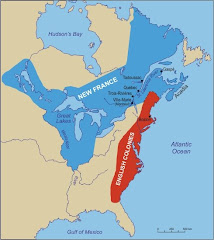
This map of British North America (1791) displays the changing face of the continent during the 18th century. Following the American Revolution, thousands of Loyalists made the journey from American soil to safety in the north. Just as this map shows the extraordinary changes in the world during this era, I've managed to see similar changes in our test scores over this term. Both classes did a very nice job on the unit test and managed to improve their averages since last term. Obviously, all that studying paid off. Let's keep up the good work. Remember to post a response to the article on the Black Loyalists before Tuesday evening. Congratulations on a fine effort. Enjoy the rest of your weekend.

Test Scores (Median):

Grade 7A: 72%
Grade 7B: 65%

Wednesday, April 8, 2009

Online Response #2: The Black Loyalists


IN EARLY SPRING 1775, AT GEORGE WASHINGTON'S MOUNT VERNON ESTATE IN VIRGINIA, SNOW STILL LINGERED ON THE LAWN, WHICH SWEPT DOWN TO THE POTOMAC RIVER.

Along the cherry walk, plump buds showed the first hint of bloom. But the peaceful scene did not reflect the turmoil and uncertainty that the colonists felt. The threat of war was real, especially after a fatal skirmish between colonists and British troops at Lexington Green near Boston, Massachusetts. Washington understood that he most likely would be the commander selected to lead the American forces into a conflict bloodier than he had ever seen. "The crisis is arrived when we must assert our rights," he wrote to a friend. Otherwise, Washington warned, white Americans would become "tame and abject slaves, as the blacks we rule over with such arbitrary sway."

By the summer of 1775, the Second Continental Congress had elected Washington commander in chief of the Continental Army, and the first terrible battle had been fought at Bunker Hill in Massachusetts. In Virginia, the royal governor, John Murray, was forced to take refuge on a British warship in the James River, after he hinted that he would not only arm the slaves but also free them as well. Given that the Virginia planters held some 180,000 enslaved people, to even hint at such a possibility was shocking to white colonists. On November 14, 1775, Murray, also known as Lord Dunmore, carried out his threat and published a proclamation to free any slaves ready to bear arms for the king.

In Virginia, most enslaved people lived with their families, certainly children with their mother and young siblings, and sometimes with extended families (with grandparents, other relatives, or close friends). So, when they heard Dunmore's offer of freedom, entire families ran away together, something that had never happened. Husbands with wives, mothers with children, grandparents, aunts, uncles, and cousins, they all ran to Dunmore. Over a period of six months, as many as 2,000 men, women, and children reached Dunmore. Some came in canoes and small boats, while others came on foot and swam out to the British ships.

The men were formed into a fighting force called Lord Dunmore's Ethiopian Regiment. However, plans to fight the rebellious colonists were thrown into chaos after an outbreak of smallpox on the overcrowded British ships. Most of the black runaways fell victim to the dreadful disease. Dunmore reported that there was not a ship that did not throw three or four dead overboard every night, and Virginians found black bodies drifting ashore on the tide. In this horrific situation, Dunmore's force was easily driven from Virginia in July 1776, having lost 70 percent of the black recruits. He then sailed north to New York, which was now in British control. With him were about 300 of his original black recruits, including a runaway of George Washington's named Harry. (See below.)

The British zone in New York drew runaways from all the surrounding colonies. They were quickly put to work providing support services for the British army and navy. By 1781, the number of black people behind the British lines was at least 4,000. Black artisans worked on rebuilding projects and in the naval yards; black teamsters hauled provisions and collected firewood; black nurses and orderlies staffed the hospitals; black laundresses and needlewomen did the washing and sewing; black pilots guided the ships safely in and out of the port; black fiddlers and banjo players provided entertainment for balls and tavern entertainment; black jockeys rode the horses at the races; black cooks, servants, and valets attended the requests of the elite. All were paid, as well as given food and lodging. Most important, the British regarded them as free people.

In the South, large numbers of runaways also joined the British at Charleston, South Carolina, and Savannah, Georgia. Lord Charles Cornwallis had about 3,000 runaways working for him at Yorktown, Virginia, in 1781. The Royal Navy employed many black seamen — about 10 percent of the crews on British ships. During the war, some 20,000 enslaved people sought freedom with the British. As many as 50 percent of them died from wounds, succumbed to diseases such as smallpox, or else were re-enslaved following the defeat of the British at Yorktown. The other 50 percent left America with the British in 1783.

The news that Cornwallis had been defeated at Yorktown shocked the runaways behind the British lines in New York. Then, worse news arrived — the British had granted independence to the American Colonies. Promises of freedom made by British commanders had depended on the British winning the war and retaining control of the Colonies. Now that the British government had lost, those promises were no longer binding. The peace treaty stated that the British were prohibited from "carrying away any Negroes or other property of the American Inhabitants." In May 1783, Washington demanded that British commander Sir Guy Carleton return the runaways behind British lines. Among these were at least seven runaways from Mount Vernon. Unless the black people behind British lines had papers of emancipation, as very few did, they could expect to be returned to enslavement for themselves, their children, and their children's children.

Carleton was not prepared, however, to go back on the word of British commanders. He saw it as his duty to honor the promises made to the runaways, and he instructed his generals to give a certificate of freedom to anyone who had been with the British for a year and allow those people to leave America.

At least 5,000 people freed by the British were sent our of New York, and another 1,000 from Charleston. They went to Canada, England, and the West Indies. About 30,000 black sailors returned with the British navy to England.

Washington took control of the United States of America at the end of November 1783. With New York finally in his hands, he led his army through Manhattan streets and that night staged a spectacular display of fireworks to celebrate his victory. Cheers from the huge crowds wafted out to Staten Island, where the last British ships were waiting for a fair wind to take them to Nova Scotia in eastern Canada. On board was Daniel Payne, a runaway from Mount Vernon, who would have seen the fireworks of Washington's triumph light up the clear night sky. Payne was leaving America as a freeman, and that was his own special triumph.

Online Response Questions:

1. What did you learn about the Black Loyalists that you did not know prior to reading this article?

2. Imagine you were living in the 13 Colonies during the Revolutionary era. Would you support independence or remain loyal to your king?

3. Did this article change your opinion of the patriots? What about the loyalists?

4. How does this article's portrayal of the American colonists differ from the characters portrayed in the film The Patriot?