Laura Secord became a Canadian legend by slipping through the enemy lines to warn the British about planned American attack at Beaver Dam. Today, monuments to Laura Secord can be found in Lundy's Lane near Niagara Falls and at Queenston Heights. A popular chocolate company was also named after Laura in the early 20th century.
Elizabeth Simcoe
Elizabeth Simcoe was the accomplished wife of John Graves Simcoe. She left a diary that provides a valuable impression of life in colonial Ontario. First published in 1934, there was a subsequent transcription published in 1965 and a paperback version issued at the turn of the 21st century, more than 200 years after she wrote it. Lady Elizabeth Simcoe's legacy also includes a series of 595 water-colour paintings that depict the Town of York.
John Graves Simcoe
John Graves Simcoe was Lieutenant-Governor of Upper Canada for only four years, from 1791 to 1796, but he made a lasting mark on the province. Not the least of his accomplishments was the founding of the first permanent settlement at Toronto. The Mosnier portrait shows Simcoe in the uniform of the Queen's Rangers, a regiment he led during the American Revolution, and which he re-established in Upper Canada in 1792.
Rose Fortune
Rose Fortune was born into slavery in the British colony of Virginia. Her family escaped slavery during the American Revolution and settled in Nova Scotia as part of the Black Loyalist migration when Rose was 10 years old. The family settled in Annapolis Royal. In 1825, she started her own business, the Lewis Transfer Company. She carted luggage between the ferry docks and nearby homes and hotels. Later Fortune became the town's police officer, patrolling the town and wharf. She also joined the underground railroad to help African Americans escape slavery.
The Boston Massacre (1770)
The Boston Massacre refers to an incident involving the deaths of five civilians at the hands of British troops on March 5, 1770, the legal aftermath of which helped spark the rebellion in some of the British colonies in America, which culminated in the American Revolution. A tense situation because of a heavy British military presence in Boston boiled over to incite brawls between soldiers and civilians and eventually led to troops discharging their muskets after being attacked by a rioting crowd. Three civilians were killed at the scene of the shooting, and two died after the incident
The Boston Tea Party (1773)
The Boston Tea Party was an act of direct action protest by the American colonists against the British Government in which they destroyed many crates of tea belonging to the British East India Company and dumped it into the Boston Harbor. The incident, which took place on December 16, 1773, was a major catalyst of the American Revolution and remains an iconic event of American history.
The Battle of Quebec (1775)
In November of 1775, General Richard Montgomery led a group of patriots in an attack on Canada. He hoped to force the British to defend Canada, and lead them away from New England. The British army was too strong (Montgomery was killed) and they were forced to retreat. No other serious attempts were made to bring the Canadian population into the war.
British North America (1763-1775)
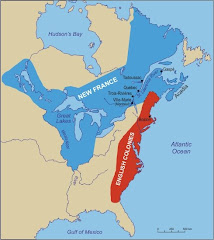
Following the Seven Years' War in North America, the former colony of New France was ceded to the British.
Though mortally wounded, Montcalm did not actually die on the battlefield. Before dying in the hospital, Montcalm remarked that he was glad not to have seen the fall of Quebec.
L'anse au Foulon/Wolfe's Cove
The British prepare for the Battle of the Plains of Abraham (September 13th, 1759).
"The Matthew"
A replica of John Cabot's ship "The Matthew" was constructed in 1997 to celebrate the 5ooth anniversary of his voyage to North America.



No comments:
Post a Comment